Unofficial Website
Unofficial Website

Buontalenti's Grotto: a Renaissance masterpiece in the Boboli Gardens, between art and nature.

The Buontalenti Grotto in the Boboli Gardens does not go unnoticed, even by the most distracted visitors.

Built at the behest of Francesco I de’ Medici, its construction took place between 1583 and 1593. Bernardo Buontalenti, an architect, artist, and set designer well-known at the time, was called upon to direct the works. In short, he was a true man of his time. Indeed, the cave that bears his name is not just a grotto; it is a stone set design, a place that blends styles, illusions, and technical genius.

The grotto is located right at the entrance to the garden, on the left side of the courtyard that connects Boboli to Palazzo Pitti. Just approaching it reveals the details: sculpted stalactites, rough surfaces eroded by time, and stone masks that almost resemble faces carved in moss.

Everything is crafted to make the visitor believe they are in front of something ancient and natural, when in fact every element has been created with meticulous care. Buontalenti, after all, knew how to enchant. Here, among faux stones and artistic illusions, he demonstrates this fully.
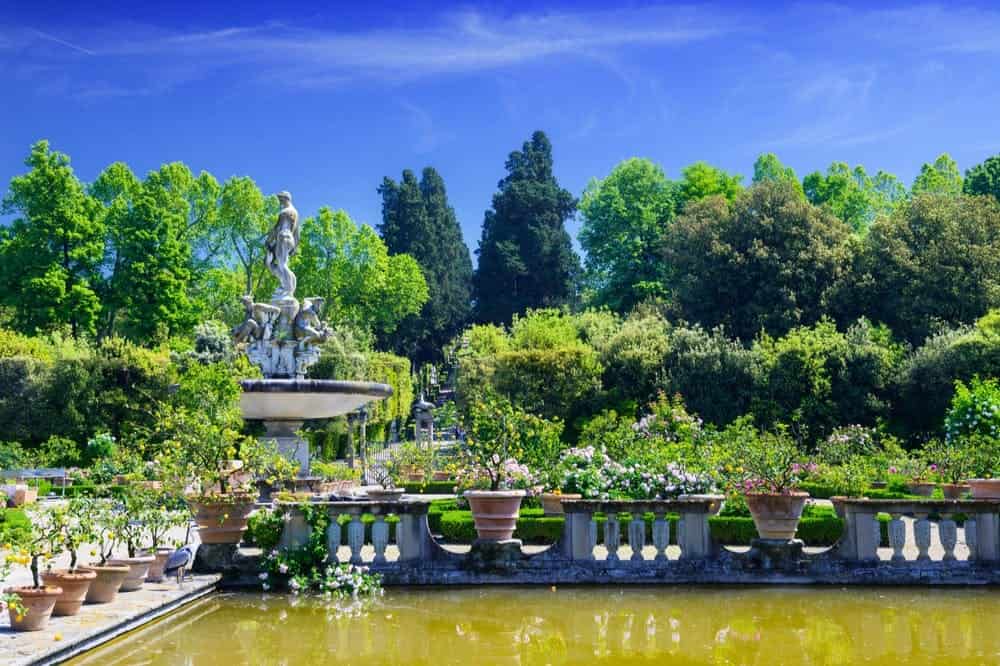
Elegant garden with fountain and blooming flowers

Inside, the environment is divided into three rooms, each with its own set design. In the first room, visitors are welcomed by an abundance of calcareous formations, stucco plant elements, and a decorated upper wall that seems alive.

The second room houses the famous statues of the Prisoners by Michelangelo (now copies; the originals are at the Louvre), set like in a natural prison, appearing to emerge from the walls as if trying to free themselves. This reflects the theme of “unfinished,” which was dear to the Renaissance, presented in an almost theatrical manner.

In the third room, there once stood the famous “Venus of Buontalenti” by Giambologna, which is now housed in the Bargello Museum. At the center, a small basin suggests the idea of a magical spring, while Venus appears surrounded by marine elements, shells, and moss. It feels like entering an aquatic dream, if only one allows a moment of silence.

Every detail is crafted to create the illusion of the natural world taking shape from art. Lights and shadows play with the reliefs on the walls, and for a moment, one forgets they are in a Renaissance garden: it almost feels like stepping into a dream.

The Buontalenti Grotto is not just a must-see for those visiting Boboli; it is one of the most captivating experiences Florence has to offer. A hidden corner, often not crowded, where fantasy and history blend uniquely. A true gem, not to be missed.
Show more

Booking Info

How to Book Your Tickets

Booking your tickets to La Grotta del Buontalenti is a piece of cake! Just head over to tiqets.com and secure your entry with just a few clicks. This will not only save you time but also let you skip the lines—more time to explore the beautiful gardens!

Ticket Options

While entry to the grotto is included with your ticket to the Boboli Gardens, consider purchasing a guided tour for a deeper dive into its fascinating history and artistic details. This way, you’ll leave with a newfound appreciation for this incredible site!

Opening Hours

  • Daily: 9:00 AM – 7:30 PM
    (Last entry at 6:30 PM)
    Be sure to check seasonal changes in opening hours, as they can vary!

Getting There

To reach La Grotta del Buontalenti, simply enter the Boboli Gardens through the Palazzo Pitti entrance. Follow the winding paths, and you’ll soon find yourself in front of this extraordinary grotto. The walk through the gardens is a delight in itself!

Show more

Location

Passes & Bundles

Multi-Day Pass
FROM €47.5
Pitti Palace: Florence’s only royal palace and the city’s largest museum complex.

INCLUDED:

Ticket
Skip The Line Ticket
FROM €29.99

USEFUL INFORMATION FOR YOUR VISIT

The Buontalenti Grotto, is open daily from 9:00 to 19:30. Last entry at 18:30. Please note that times may vary seasonally, so it’s a good idea to check before you go!
To reach La Grotta del Buontalenti, head to the Boboli Gardens entrance located at Palazzo Pitti. Once inside the gardens, follow the winding paths, and you’ll find the grotto nestled among the lush greenery. It’s like a hidden treasure waiting to be discovered!
Plan for about 30 minutes to 1 hour. This gives you plenty of time to explore the intricate details of the grotto, admire the stunning sculptures, and soak in the serene atmosphere. If you love taking photos, you might want to linger a bit longer to capture the magic!
Access to La Grotta del Buontalenti is included with your ticket to the Boboli Gardens, which is fantastic! To make the most of your visit, consider purchasing your tickets in advance through tiqets.com. This way, you can skip the lines and dive right into the beauty of this enchanting grotto!
The stunning details and unique architecture of the grotto make for perfect photo opportunities!
After your visit to the grotto, wander through the rest of the Boboli Gardens. There are plenty of other beautiful sights to discover!

History

The Buontalenti Grotto, located within the Boboli Gardens in Florence, is a magnificent example of Renaissance architecture and represents an important historical landmark. Its construction began in 1583 under the direction of the famous architect and sculptor Giovanni Battista Buontalenti, after whom the grotto is named. Commissioned by Francesco I de’ Medici, Grand Duke of Tuscany, the grotto was conceived as a place for leisure and entertainment for the Medici court.

The work is distinguished by its extraordinary fusion of natural and artistic elements. The grotto, carved into the rock, is adorned with stalactites, sculptures, and frescoes depicting classical deities and mythological scenes. The structure is divided into several rooms, each presenting unique and fascinating architectural details. Among these, the Hall of Nature, characterized by its elaborate decorations, is particularly noteworthy, featuring a series of statues that celebrate the beauty of nature and art.

During the 17th century, the grotto also became a place of representation, used for parties and celebrations involving the Tuscan nobility. During this period, decorative elements and renovations were added, enhancing its prestige. However, over time, the grotto fell into disrepair and was forgotten.

It was not until the 19th century, with a renewed interest in Florence’s cultural heritage, that the Buontalenti Grotto underwent restoration work. Today, the grotto is an important tourist attraction, visited by thousands of people each year. It not only embodies the artistic genius of the Renaissance but also represents a symbol of the grandeur of the Medici family and their passion for art and beauty.

Visiting it is like taking a journey through time, where art, nature, and history intertwine in a magical and evocative atmosphere. The Buontalenti Grotto continues to enchant visitors with its timeless beauty and captivating past.

Show more

Reviews

Gallery

Tips